
In 2005 the argument about media bias was everywhere and entirely qualitative. You could say a network was slanted; you could not point at a number. That’s Not News was my attempt at the number.
The premise was in the name. Readers submitted a story, tagged it with the outlet that ran it, and argued in the comments about whether it was actually news. The site aggregated those judgments into a running score per outlet. A credibility rating, crowdsourced, a year before anyone was saying “crowdsourced.”
Rating the news
The scoring panel was the whole point of the site, and it is the piece I would still defend. Each outlet gets a bar, each bar is drawn in that outlet’s own brand colour, and the number is the share of its output that readers judged to be actual news. CNN 80%, NYTimes 65%, MSNBC 55%, ABC News 45%.
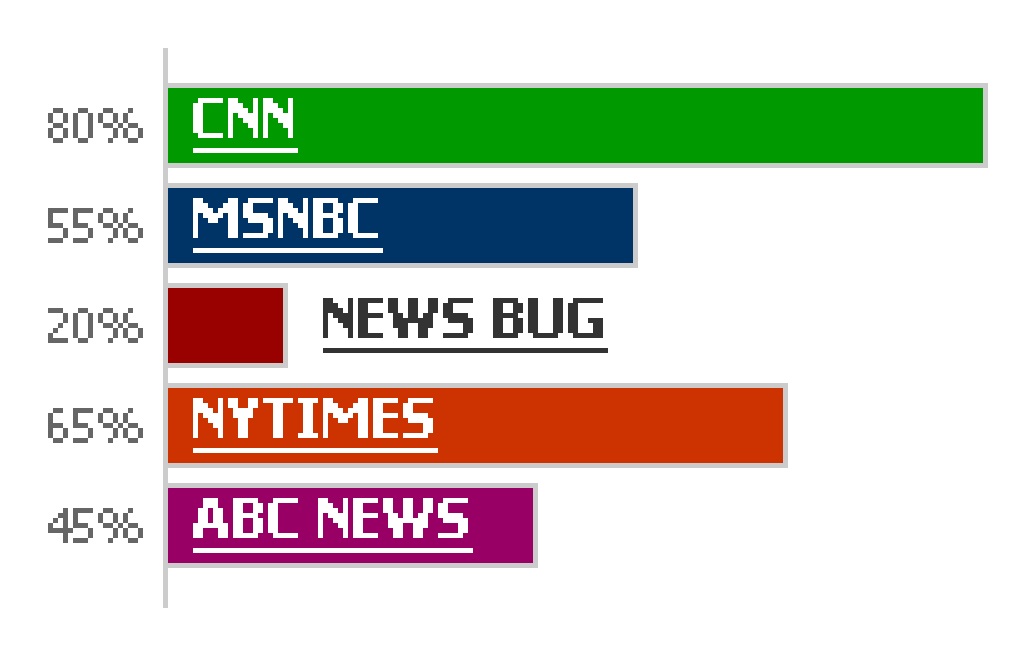
“News Bug” in that mock is the house entry, scored 20%, which tells you the tone the site was going for. It was not a neutral instrument and never pretended to be.
The front page
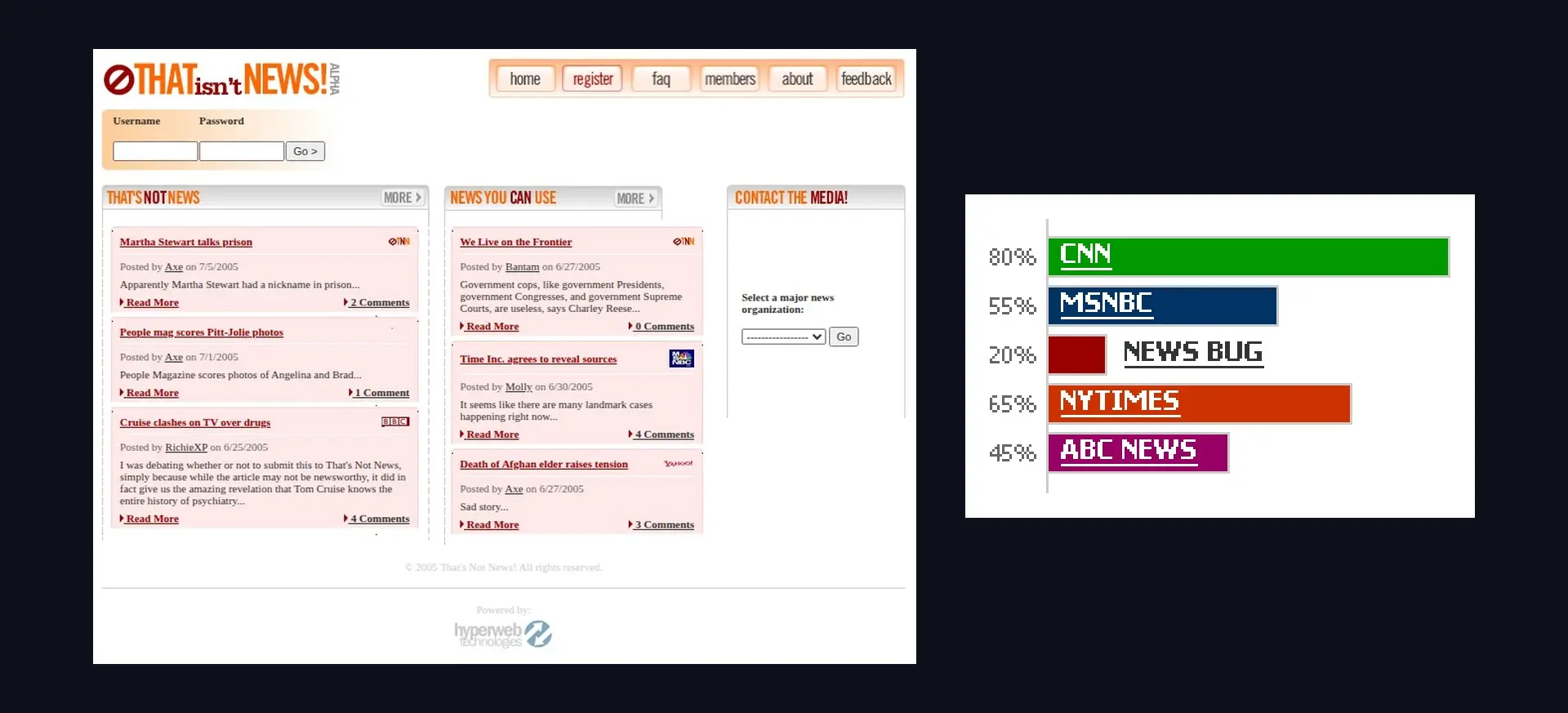
Three columns: submitted stories on the left, News You Can Use in the middle, Contact The Media on the right with a picker that took you straight to a network’s tip line. Every story carries its outlet’s logo, its submitter, its date, and its comment count, because the comment count was the actual signal. A story nobody argued about was not doing its job.
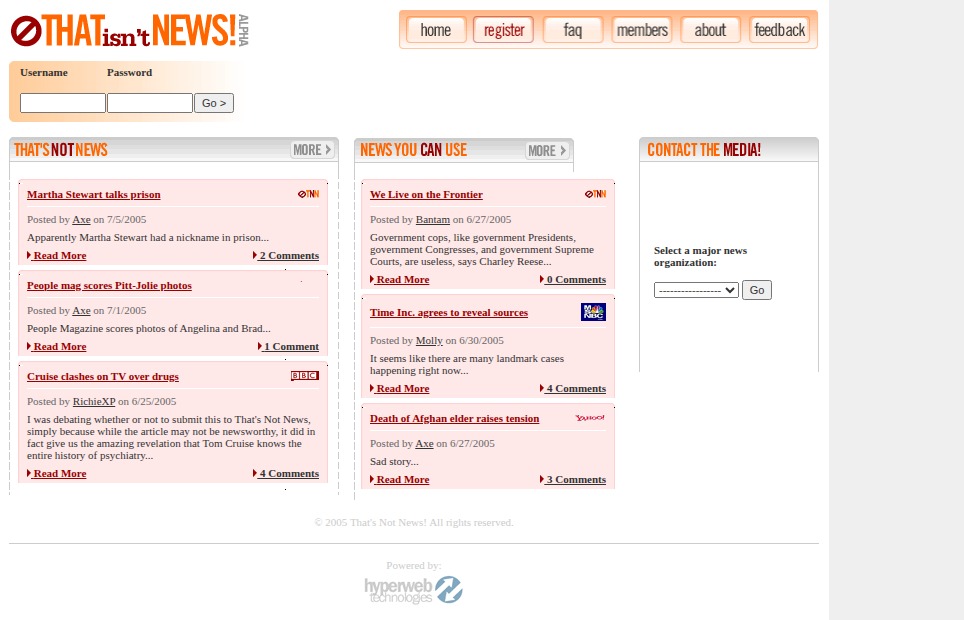
Submissions were moderated. 109 stories came in and 28 cleared review, which is a ratio I did not think about at the time and find funny now: a site about editorial standards, applying editorial standards, rejecting three quarters of what it was sent.
One sheet, every module
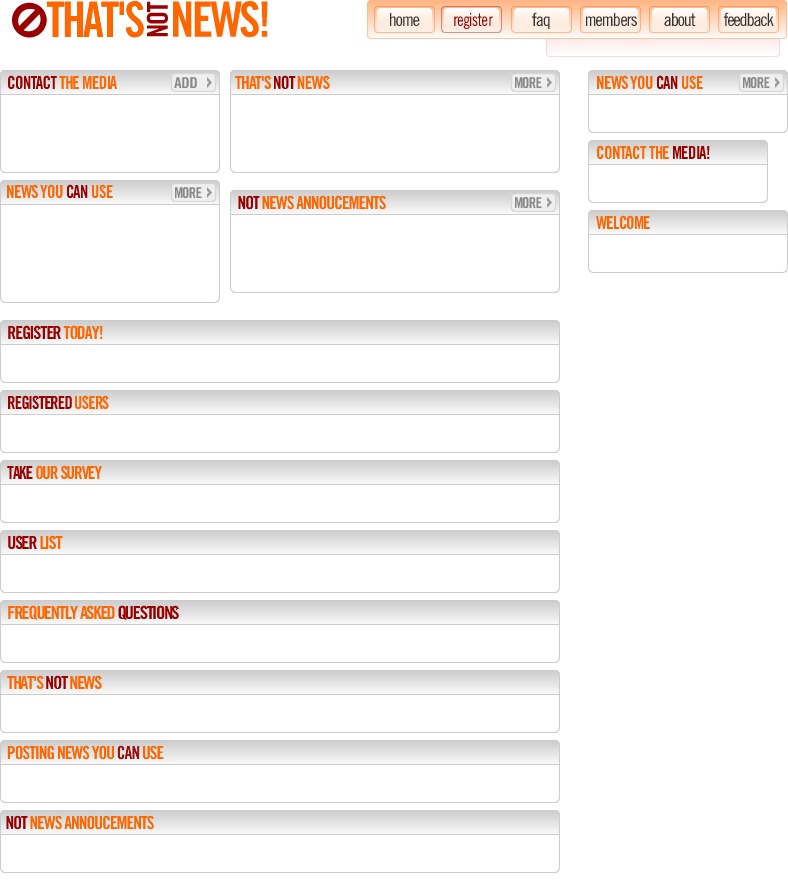
Before building the pages I drew the panels. Every module that would appear anywhere on the site, as an empty shell: the header bar, the rounded box, the MORE > affordance in the corner. Then the pages were assembled out of that inventory rather than designed one at a time.
The forum underneath it was hand-written too, not installed: adduser.asp, addforum.asp, post.asp, profile.asp, _process/login.asp, _rsc/secure.admin.asp, over a database whose tables were forums and users. No licence file and no third-party credit, because there was no package to install.
What it sat next to
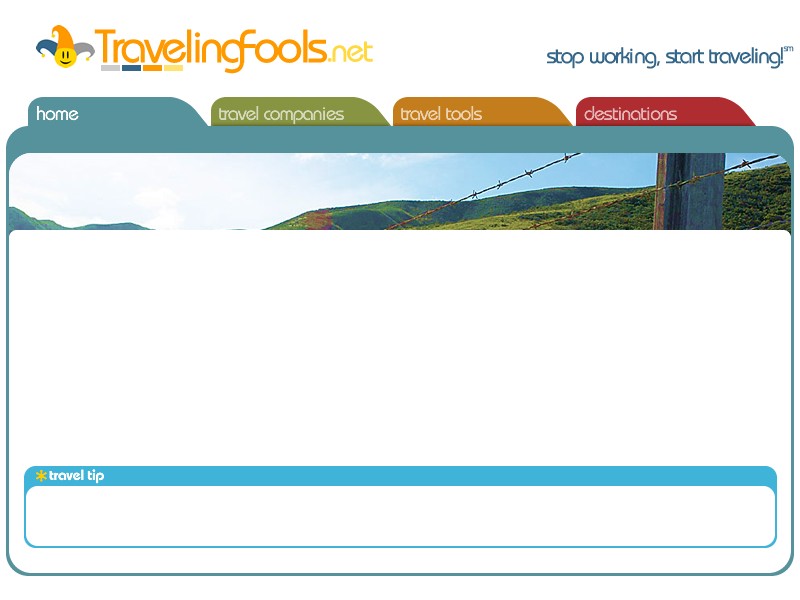
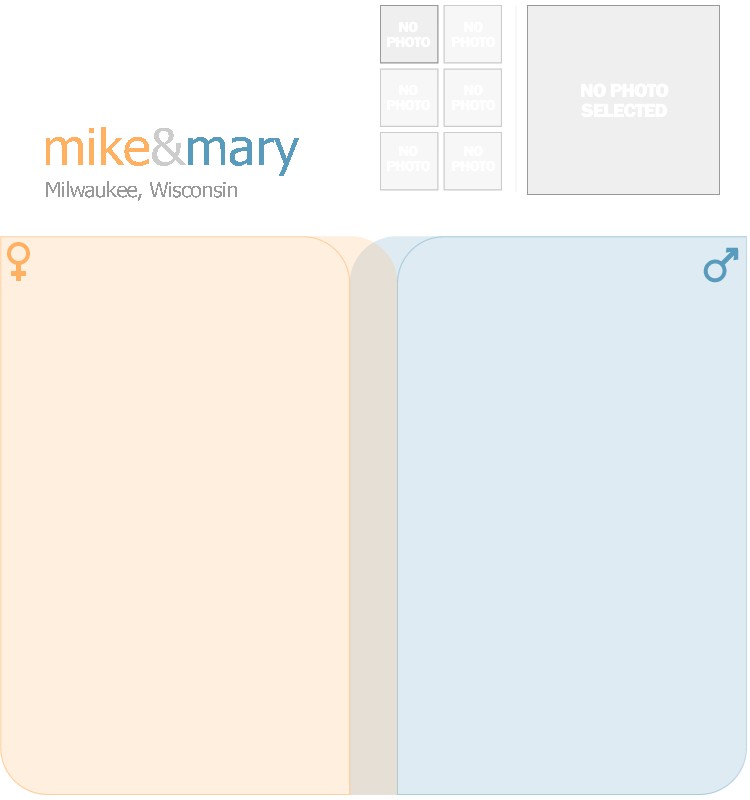
That’s Not News was not a one-off. It came out of a run of social sites I built between 2004 and 2006, before Facebook opened to the public on 26 September 2006: PIXshare for photo sharing, the same year Flickr launched; TravelingFools, a travel community whose whole page recoloured per section so the chrome told you where you were; and What A Sweet World, a set of properties whose account model assumed a couple rather than a person, with registration that asked for Partner One and Partner Two and a profile that split down the middle so neither half was subordinate.


All of it carried ©2005 Hyperweb Technologies, LLC in the footer. Nobody called any of it social media yet. We just called them websites.
Provenance: recovered in 2026 from a disk image of the drive these sites were built on. That’s Not News is 52 Classic ASP files and an Access database, 2005; its rating panel and layout sheet are the original design sources, flattened onto white and otherwise unretouched. The front-page screen is a reconstruction, not a period capture: Classic ASP needs a Windows server, and this source could not be booted as-is in any case, so the page was rebuilt from the ASP files’ own HTML with the loops filled from the site’s own database, viewed as a logged-out visitor. Story titles, member handles and dates are the real records. Nothing from the members table is shown; it holds real names, addresses and plaintext passwords. Every project here was checked for licence files and third-party credits before inclusion.